


What Are Certified Translation Services: 2026 Guide
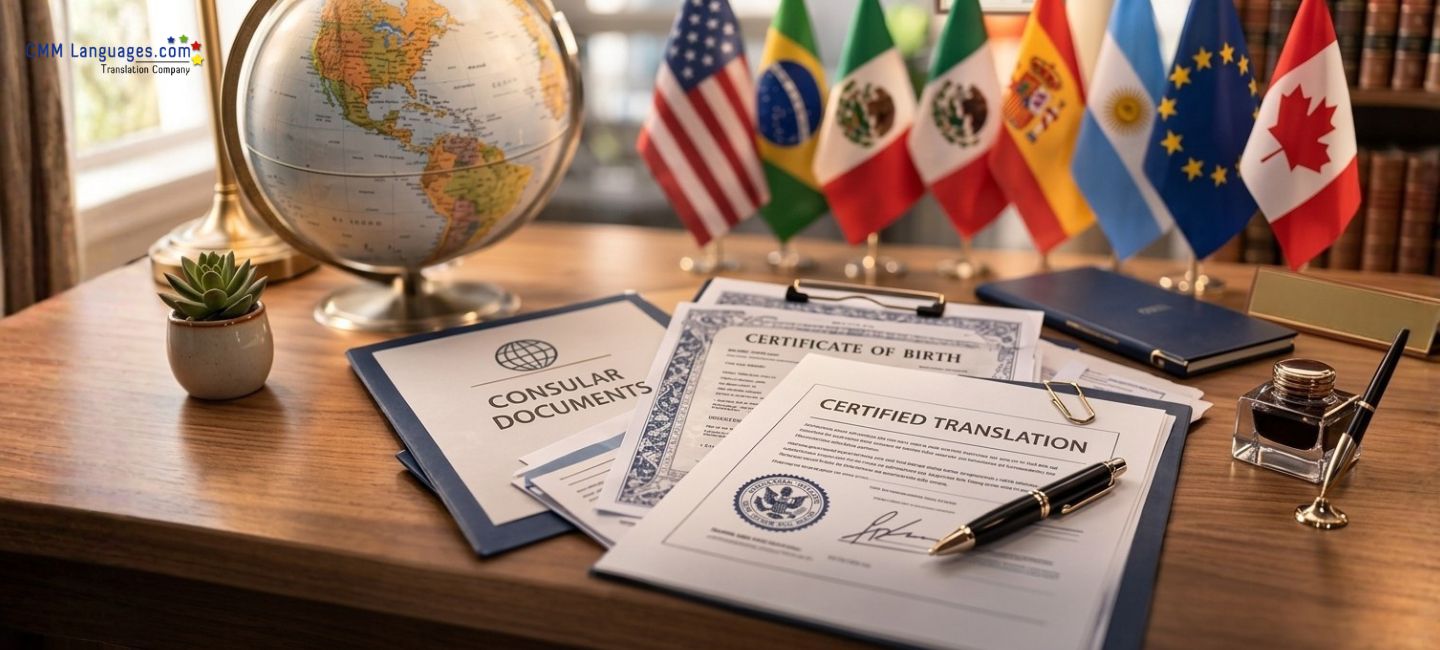
What Are Certified Translation Services?
- Includes Certificate of Accuracy with the translated document
- Contains name of the translator, translator’s signature, and date of certification
- Guarantees that the document is complete and correct
- Usually required by government organizations, colleges/universities, and courts of law
When Do You Need Certified Translation Services?
Certified translation services are required whenever official documents must be submitted to authorities that demand verified accuracy and authenticity. The need typically depends on the receiving institution, as each organization defines its own documentation standards.
- 1. Immigration applications, including birth certificate translation for visa submissions to authorities like USCIS
- 2. University admissions requiring translated academic transcripts, diplomas, and recommendation letters
- 3. Government procedures such as passport applications, identity verification, and civil registrations
- 4. International legal proceedings involving contracts, affidavits, or court-related documents
- 5. Employment or relocation processes where official records must be validated across jurisdictions
Common Documents That Require Certified Translation
Certified document translation services are commonly used for official records where accuracy and validation are mandatory. From personal identification to business agreements, best translation services ensure that documents meet international acceptance standards, including birth certificate translation and certified translation of marriage certificate requirements
| Category | Document Type |
|---|---|
| Personal | Birth certificate translation, passports, identity cards, driver’s licenses |
| Personal | Certified translation of marriage certificate, divorce decrees, death records |
| Academic | Transcripts, diplomas, mark sheets, academic certificates |
| Legal | Contracts, affidavits, court orders, notarized agreements |
| Business | Patents, incorporation documents, financial reports, compliance records |
Certified Translation vs. Standard Translation
It is necessary to understand the distinction between standard translation and certified translation services to make an informed decision about what best suits you. The two types of translations have their significance but depend entirely on how they are applied depending on circumstances.
- Certified Translation: Used in cases where there are legal or official requirements and need a signed Certificate of Accuracy for the acceptance of a document
- Standard Translation: Ideal for non-formal or unofficial purposes such as use of blog postings, emails, marketing, etc.
- Use certified translation: Immigration applications, scholarly work submissions, legal proceedings in court, or any procedure within the government
- Use standard translation: Presentations in business meetings or other websites
Who Can Provide Certified Translation Services?
How the Certified Translation Process Works
A systematic process guarantees precision and adherence to guidelines in online certified translation services, particularly when submitting documents officially. It is also essential to maintain the original format of the documents for purposes of credibility.
- 1. Source Submission: The source material is submitted for review, which includes the language pair used and certification details
- 2. Translation: Translation is done by a competent linguist, retaining the same meaning and formatting
- 3. Proofreading: This process involves a second reviewer checking accuracy, consistency, and completeness
- 4. Drafting of Certification Document: A Certificate of Accuracy will be drafted and signed to certify the translation
- 5. Delivery: Delivery of the translated text along with the certification in a particular format
Benefits of Using Certified Translation Services
- Helps make the documents legally acceptable to authorities, institutions, and international organizations
- Makes the rejection of documents unlikely during immigration, educational, or legal application procedures
- Aids in maintaining accurate translation in terms of terminology, format, and context
- Aids in meeting international requirements and regulatory demands
- Offers Global Acceptance, which facilitates document usability internationally
- Serves as a risk management measure in making sure that the documents meet required validation criteria
Common Mistakes to Avoid in Certified Translation
- Self-translation is often not accepted by authorities because it lacks verification.
- Relying on non-professional friends or unqualified translators for important documents can lead to problems.
- Important details like names, dates, and numerical data may be overlooked.
- Formatting requirements that match the original document layout might be ignored.
- Missing submission deadlines can cause issues, especially in visa or immigration processes.
How to Choose the Right Certified Translation Provider?
The right choice of the provider will provide you with accurate results along with the guarantee of compliance with all standards.
- Providers of certified translation services in Mumbai with good experience of translating official documents should be considered.
- Make sure that providers have the ability to meet any urgent deadlines without reducing accuracy.
- Consider the confidentiality policy used by these providers for protecting personal information.
- It is important to consider the credibility of the provider when choosing among available translation services in Mumbai.
- Online certified translation services should be preferred to get transparent results.
- ISO certification can also help to select reliable services.
Final Thoughts on Certified Translation Services
FAQs on Certified Translation Services
1 What are certified translation services?
Certified translation services provide officially verified translations with a signed statement confirming accuracy and completeness.
2 When are certified translation services required?
These are needed for immigration, legal, academic and government document submissions that need official validation.
3 Are certified translation services legally accepted worldwide?
Certainly, certified translations are well-received when they comply with certain authority or country specifications.
4 Who can perform certified translation services?
Qualified translators or agencies provide certified translations with accuracy declarations for official document acceptance.
5 How long do certified translation services take?
The turnaround period will depend on the complexity of the document, language combination, and certification requirements.


Recent Comments