

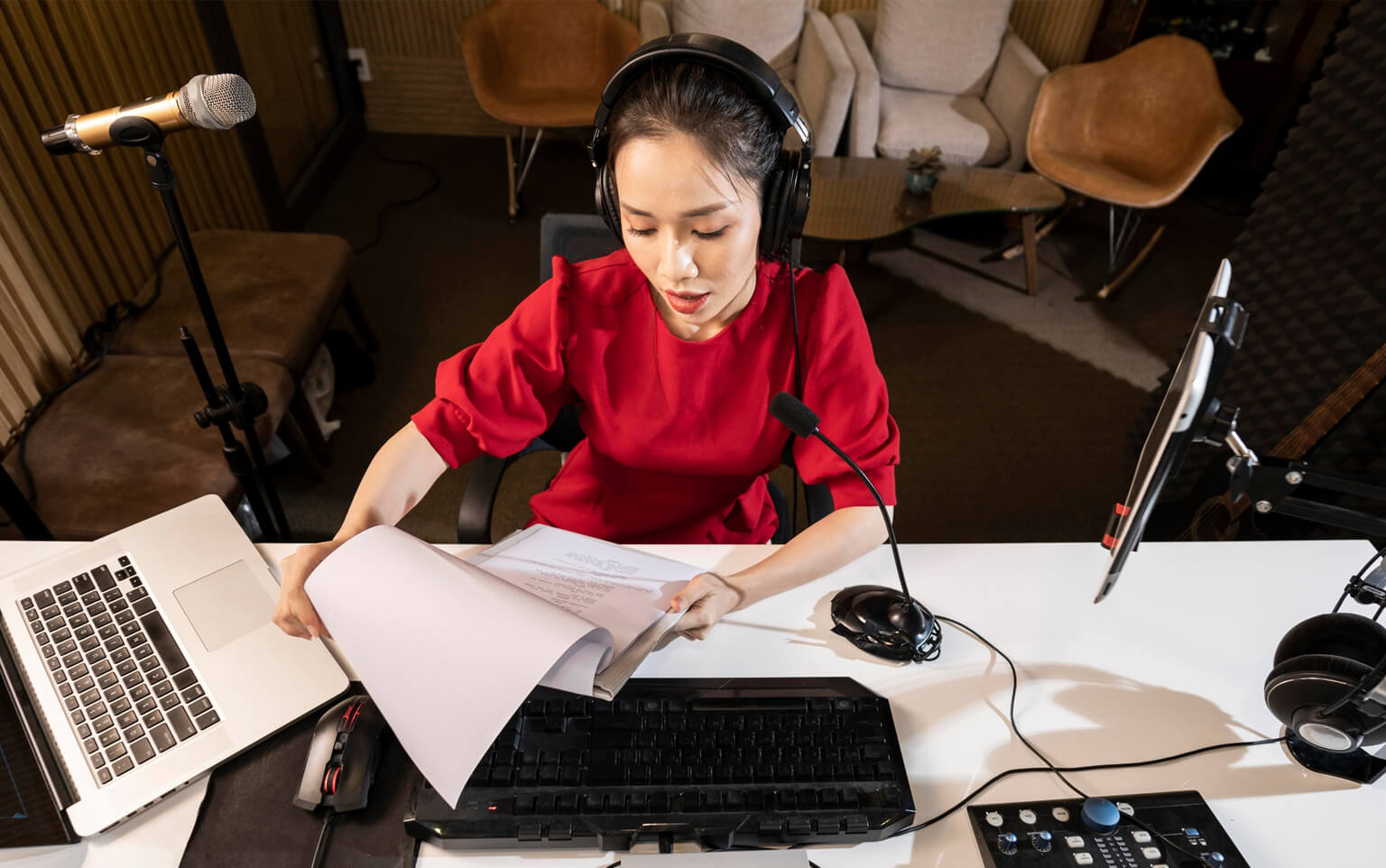
What Are Multilingual Voiceover Services and Why They Matter
Introduction to Multilingual Voiceover Services
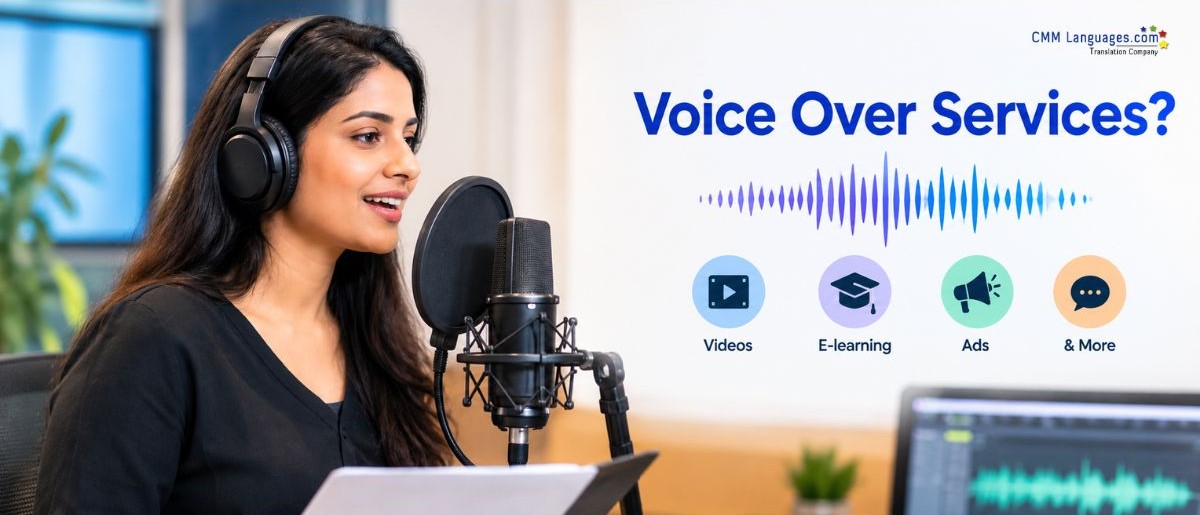
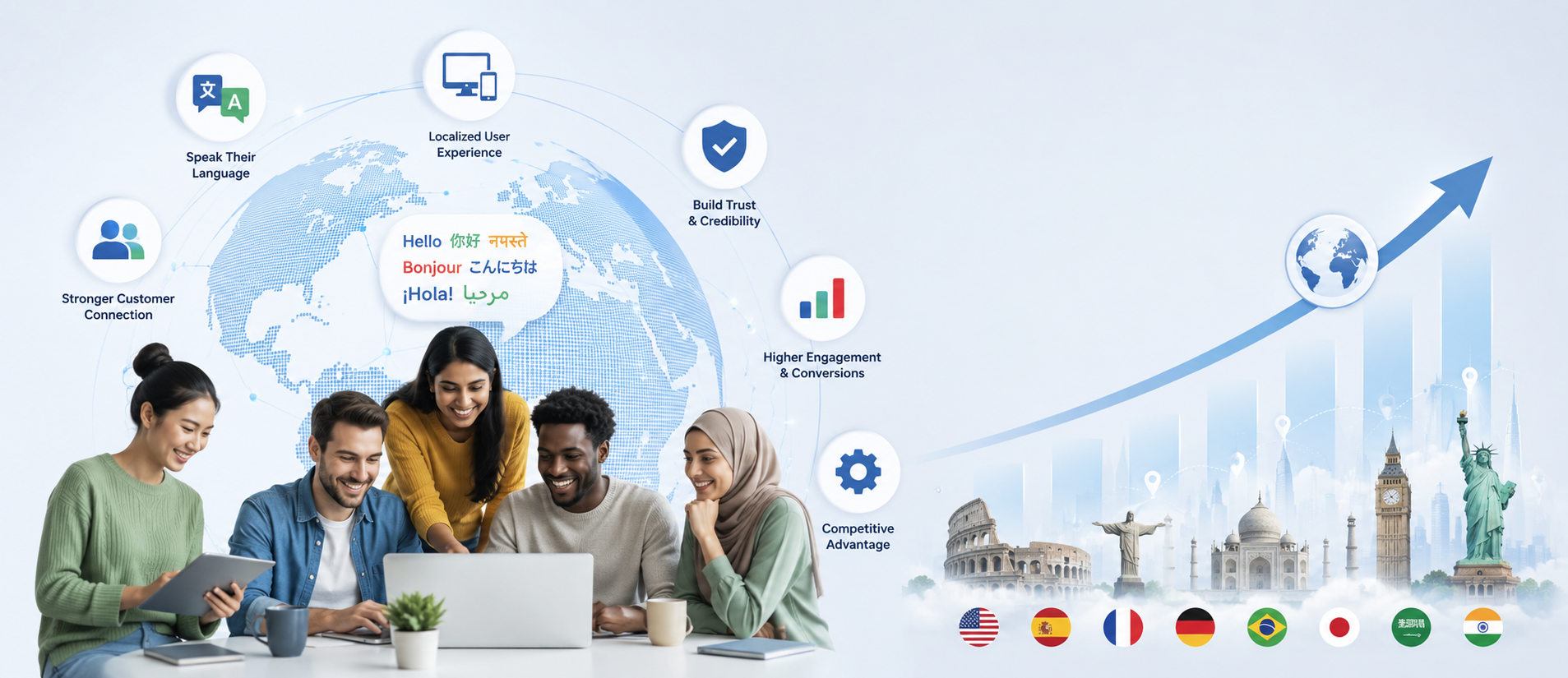
Voice-over services are what separate content that reaches a global audience from content that stays confined to a single language market. An e-learning course built for English speakers can reach learners in Germany, Japan, Brazil, or Maharashtra the moment it carries a well-done voiceover in their language. A corporate training video, a product explainer, a documentary – all of these connect with audiences at a completely different level when the voice speaking to them sounds like someone from their own world.
Multilingual voiceover translation services are the full end-to-end process behind that outcome. The work starts with translating the source script, adapting it for natural spoken delivery, then recording with native-language voice artists, and finally syncing the audio back to the original media. Every step influences the final output, and a weak link anywhere in that chain results in content that audiences sense is wrong, even if they can’t always explain exactly why.
COMPREHENSIVE SUMMARY
- Voice-over Services: Native-speaking voice artists record translated or original scripts in the target language, matching the tone, accent, and pace the content needs to land correctly with its audience..
- Multilingual Voiceover Translation Services: Script translation, speech timing adaptation, native artist recording, and audio sync to the original media are all part of one connected production workflow.
- Why Voiceover Translation Matters: Hearing content in your own language beats reading subtitles every time, which is exactly why e-learning platforms, training teams, and OTT content producers invest in localized audio.
- Professional Voice-over Services: Studio-quality output from native-language artists is what separates a professional provider from someone who simply hands a translated script to a voice actor and calls it done.
- Voice-over Services India: Demand for voiceover in Hindi, Marathi, Tamil, Telugu, and other regional Indian languages is climbing steadily as EdTech and corporate training content reaches deeper into regional markets.
- Audio Translation Services: Speech rhythm, cultural register, and lip-sync timing all need attention before a translated script goes near a recording booth, and that adaptation work is what audio translation services actually cover.
- Choosing a Voice-over Company: Native artist depth, studio quality, in-house translation, confidentiality protocols, and content-type experience are the five things worth verifying before you sign off on any provider.
KEY TAKEAWAYS:
- Voice-over services live or die on the voice itself; accent, tone, and pacing shape how the audience receives the content just as much as the words being said.
- Multilingual voiceover translation services run as a chain where script translation, cultural adaptation, and studio recording each feed into the next, and a weak link in any one stage shows up clearly in the final audio.
- Professional Voice-over services handled under one roof mean the translator and the voice artist are working from the same brief, which cuts coordination errors and keeps quality consistent across every language version.
Need Voiceover in Multiple Languages?
CMM Languages provides professional Voice-over services in 65+ languages with native voice artists, certified translators, and studio-quality recordings.
What are Multilingual Voiceover Services?
Definition and Meaning
Multilingual voiceover translation services refer to the process of recording professionally narrated audio for any content – video, e-learning, presentations, audiobooks, or games, in one or more target languages, with a native-speaking voice artist who matches the required tone, accent, and delivery style.
This is not the same as simply recording a translated script word for word. Audio translation services in a voiceover context ask the translator to first convert the source content into natural spoken language for the target tongue, then a voice artist must deliver that content in a way that feels native, not translated. The gap between a voiceover that sounds natural and one that sounds like a dub is almost entirely down to how well the adaptation and recording are handled from the very beginning.
Why Voiceover Translation Services are Important
People process audio in their native language faster, with higher comprehension and stronger emotional response, than they do reading subtitles alongside original narration they cannot follow. According to a CSA Research study, 76% of consumers prefer to purchase products and engage with content in their native language, and video content with localized audio consistently outperforms subtitled versions in viewer retention and completion rates.
For businesses, this carries a direct commercial impact. An e-learning module with voiceover in the learner’s language achieves measurably better knowledge retention. A product video narrated in the buyer’s language builds faster trust. A corporate training video delivered in Hindi, Marathi, or Tamil actually gets watched to the end instead of being dropped after 30 seconds when the viewer cannot follow the narration.
Want Your Training Content Localized in Indian Languages?
CMM Languages offers Voice-over services India businesses count on, covering Hindi, Marathi, Tamil, Telugu, Gujarati, and 60+ other languages with native artists.
Types of Multilingual Voiceover Services
E-Learning Voiceover
E-learning is the biggest single driver of professional Voice-over services demand in India and globally right now. A 2024 KPMG India report valued India’s e-learning market at approximately USD 6.8 billion in FY2024, with projections pointing toward USD 30 billion by 2030. Every EdTech platform, corporate LMS, and digital training module that needs to reach learners across language groups depends on multilingual voiceover to make that content genuinely accessible.
E-learning voiceover needs artists who maintain a clear, instructional, and engaging delivery across long recording sessions. The pacing must match the visual timing of course slides, and the tone must suit both the subject matter and the learner’s profile.
Corporate and Business Presentation Voiceover
Companies use audio translation services for investor presentations, product explainer videos, internal training content, onboarding modules, and marketing campaigns. A global business entering a new market cannot afford to represent its brand through accented or mechanical-sounding narration. The voice carries the brand impression just as much as the visual design does.
Corporate voiceover also covers IVR (Interactive Voice Response) systems, where every automated phone menu and customer support prompt must be recorded in the customer’s language with appropriate formality, clarity, and regional naturalness.
Movie and Documentary Narration
Voiceover translation services for film content add another layer entirely. When the translated dialogue must match on-screen mouth movements, the translator cannot just produce an accurate version of the source script. They must produce an accurate version that also fits within the lip movement timing visible on screen, which often means restructuring sentences, trimming words, or finding synonyms that preserve meaning while matching the original syllable count as closely as possible.
That constraint runs through the recording session too. The voice artist must hit timing marks, maintain character, and deliver natural emotion inside boundaries the original language did not impose. Getting this consistently right across an entire film or documentary series takes artists who have done this work before, not general voiceover talent stepping into a new format.
Audiobook Voiceover
Audiobook recording demands exceptional stamina and consistency from the voice artist. A full-length book can require 10 to 20 hours of studio recording time, and the narrator’s voice, pacing, and character consistency must hold throughout. Multilingual audiobook voiceover adds the translation layer first, where the text must be rendered into natural, literary prose in the target language before a single line gets recorded.
Gaming and App Audio
Game audio localization is one of the fastest growing segments of audio translation online demand globally. Modern video games contain hours of voiced dialogue, character interactions, tutorial narrations, and menu prompts. Each piece must be translated, culturally adapted, and recorded with artists who can match the original character’s energy in the new language. Mobile apps rely on voiceover for onboarding flows, accessibility features, and in-app guidance across multiple regional markets.
Producing Game Audio or App Voiceover in Multiple Languages?
CMM Languages handles game and app audio localization with native artists who know how to match character voice, energy, and delivery across languages.
Industries That Use Voice-over Services
Professional Voice-over services are in active use across a broader range of sectors than most people expect:
| Industry | How Voiceover is Used |
|---|---|
| EdTech and E-Learning | Course narration, tutorial walkthroughs, assessment audio |
| Corporate Training | Onboarding videos, compliance training, safety briefings |
| Media and Entertainment | Movie dubbing, documentary narration, streaming content |
| Healthcare and Pharma | Patient education videos, medical training modules |
| Retail and E-commerce | Product videos, brand campaigns, IVR customer support |
| Gaming and Apps | Character dialogue, in-game instructions, UI audio |
| Government and Public Sector | Public awareness campaigns, official training content |
Key Benefits of Professional Voice-over Services
Working with a quality voice-over company that manages both translation and recording under one roof delivers results you see directly in how your content performs:
- Higher audience engagement: Native-language audio keeps viewers watching longer and retaining more compared to subtitled or inadequately dubbed content.
- Brand consistency across markets: A professional provider matches tone, formality, and style to your brand guidelines in every target language without you having to brief five different vendors separately.
- Better learning outcomes: Learners who hear training content in their own language process and retain it faster, which is why localized voiceover in corporate training programs delivers measurably better assessment scores.
- Scalability across languages: A single content project can go into 10 or 15 languages simultaneously when your provider has both the translators and the voice artist network in-house and ready.
- Accessibility compliance: Many markets now require audio accessibility features in digital products, and multilingual voiceover directly meets these regulatory and platform requirements.
- Stronger first impression in new markets: A brand video narrated by a native-sounding voice artist lands far better with new market audiences than one clearly built for a different region and simply re-narrated.
Challenges in Multilingual Voiceover Services
Voice-over services India providers and global agencies alike run into a consistent set of challenges in this work:
- Script adaptation for spoken delivery: A translated text that reads well on paper does not always flow naturally as spoken audio. Long sentence structures, formal register, and passive constructions all need reworking before they go into a recording session. A translator who does not adapt scripts specifically for speech produces voiceovers that sound like someone reading aloud, not speaking naturally.
- Audio timing and lip-sync management: When voiceover must match on-screen video, every segment of recorded audio must fit within the timing of the original footage. Languages vary widely in how long the same content takes to say. German runs longer than English in most cases; Japanese tends shorter. Managing this without making the delivery sound rushed or artificially stretched is a production skill that takes real accumulated experience.
- Live voice translation pressure: Live voice translation for conferences, live events, and real-time broadcasts carries a layer of immediate pressure that pre-recorded work does not. The interpreter must deliver accurate, fluent, real-time output with no room for reshoots or corrections, which requires language proficiency combined with composure under strict time pressure.
- Regional accent and dialect matching: Spanish is not one single voice. Latin American Spanish and Castilian Spanish sound different to their respective audiences, and using the wrong regional variant sends an immediate signal that the content was not made for them. The same applies to Arabic dialects, Chinese variants, Brazilian versus European Portuguese, and several regional Indian languages where accent carries strong cultural identity.
- Recording environment and quality control: A voiceover recorded without professional studio oversight, with background noise, inconsistent microphone pickup, or poor acoustic treatment cannot be salvaged entirely in post-production. This is a recurring problem with providers who rely on unmonitored remote freelancers without quality audit processes in place.
How to Choose the Right Voice-over Company
The Voice-over company you pick for multilingual content will show up directly in how that content performs with its audience. Here is what actually matters when you are making that call:
- Native artist availability: Ask specifically who will record your project and what their background is. Verified, experienced native-language artists are not the same thing as outsourced freelancers with no audit trail behind their work.
- In-house translation capability: When translation and recording happen under the same roof, you get one team accountable for the full output. The moment those two stages go to separate vendors, coordination gaps open up and quality suffers.
- Studio-quality audio delivery: Request sample recordings before you commit. Listen for background noise, microphone consistency, and whether the delivery sounds natural or read. These things do not fix themselves in post-production.
- Script adaptation experience: A translated script that works on paper does not automatically work in a recording booth. The provider must rework the text for spoken delivery before the artist ever steps in front of a microphone.
- Live voice translation support: For events, webinars, or live broadcasts that need live voice translation, check whether the provider has trained simultaneous interpreters available in your specific language pairs, not just a general language roster.
- ISO certification and confidentiality: Any project carrying brand content, unreleased media, or proprietary training material needs NDA signing and documented data security as standard practice, not as an optional extra.
CMM Languages has been that Voice-over company for Indian and international businesses since 2008, running 65+ languages with native artists and ISO 9001-certified processes out of their Navi Mumbai studio
Ready to Scale Your Content Across Languages?
CMM Languages manages script translation, voice artist selection, studio recording, and delivery under one roof. No handoff gaps, no quality surprises.
Multilingual Voiceover vs Subtitling
Both voiceover and subtitling make content accessible across language barriers, but they serve different audiences and content types in ways that matter for your production decision:
| Criteria | Multilingual Voiceover | Subtitling |
|---|---|---|
| Audience Experience | Native-language audio; no reading required | Original audio retained; requires text reading |
| Accessibility | Wider reach including non-readers and low-literacy audiences | Limited for visually impaired or lower-literacy viewers |
| Production Cost | Higher; requires recording and audio production | Lower; text only |
| Viewer Retention | Higher for training and corporate content | Lower; viewer attention splits between video and text |
| Best Use Case | E-learning, corporate training, app audio, audiobooks | Film festivals, news clips, online video archives |
| Cultural Adaptation | Full script and delivery adapted for target culture | Text adapted but original speaker tone does not carry |
The call between voiceover and subtitling is not only about budget. For training content, corporate communication, and audience markets where reading a foreign-language subtitle while watching the screen creates cognitive load, audio translation online via professionally recorded voiceover consistently produces better results. Subtitling works well when maintaining the original speaker’s voice is part of the viewing experience, as in news interviews, court proceedings, or international cinema.
Not Sure Whether Voiceover or Subtitling Works Better for Your Project?
CMM Languages can advise on the right format for your content type and audience within one consultation call at no cost.
Conclusion
Voice-over services have moved from a specialist post-production need to a mainstream content requirement for any business communicating across language markets. India’s e-learning market alone is heading toward USD 30 billion by 2030, and every course, every training module, and every product video in that space needs to reach learners and buyers in the language they actually think in. Subtitles serve a purpose, but for content that needs to educate, train, persuade, or build brand trust, localized audio is what closes the gap between content delivered and content genuinely understood by the person on the other end.
Finding the right Voice-over services India provider means finding a team that controls the full workflow, script translation, cultural adaptation, voice artist selection, studio recording, and final delivery without passing your project across multiple vendors who have never coordinated with each other. CMM Languages has run that complete workflow from Navi Mumbai since 2008, with 65+ languages, native artists, certified translators, and ISO-certified processes all working together on the same project. Your next content project can go multilingual without the usual production headaches. Reach out today at request@cmmlanguages.com or call +91-9167202204 for a free quote.
FAQs on Voice-over services
1 What are multilingual voiceover services?
Multilingual voiceover translation services combine script translation and professional native-language audio recording to make video, e-learning, or media content accessible and natural-sounding for audiences in multiple target languages.
2 Why do businesses need professional Voice-over services?
Audiences engage more deeply, retain information better, and trust content more readily when they hear it in their own language from a voice that sounds genuinely native to them.
3 What types of content use audio translation services?
E-learning courses, corporate training videos, product explainers, audiobooks, movie narrations, game audio, and IVR systems all use audio translation services as a standard production requirement.
4 What is the difference between voiceover and subtitling?
Voiceover replaces the original audio with a native-language recording, while subtitling keeps the original audio and adds translated on-screen text. Voiceover delivers higher engagement and works better for training and corporate content.
5 How do I find the right Voice-over company for my project?
Look for a provider with native artists in your target languages, in-house script translation, studio-quality delivery, confidentiality protocols, and direct experience with your specific content format before you commit.
Recent Comments