

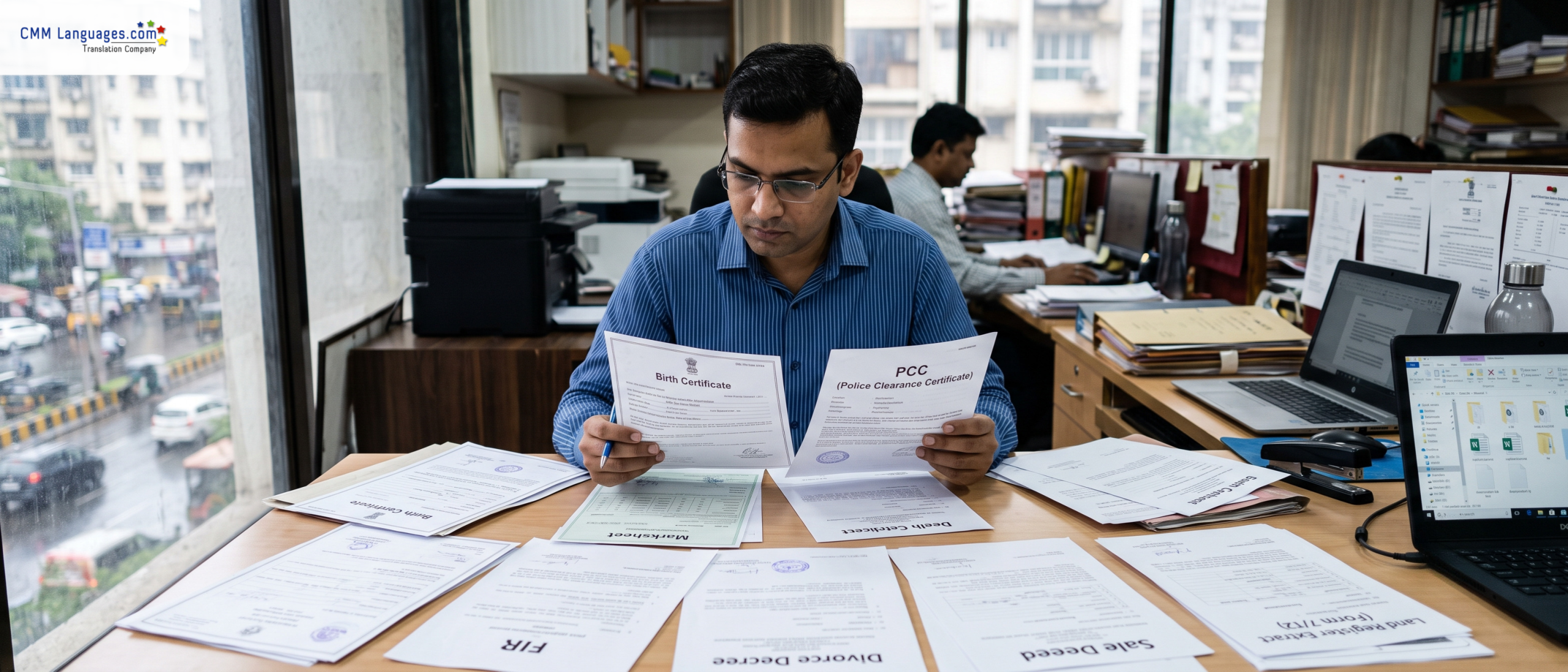
India has been part of the Hague Apostille Convention since 2005, which means a document authenticated once carries legal weight across every member country without further legalisation. That single fact shapes most of what certified translation services in Mumbai actually do day to day, whether the document is headed to a court, a consulate, or a foreign employer. Someone applying for a UK study visa and a company signing a contract in Germany run into the same basic problem: a document written in one language, needed in another, with an authority on the other end that won’t just take your word for it. This guide covers what certified translation means, which documents need it, and how to avoid the rejections that catch people out the most when they don’t work with proper certified translation services.
Key Takeaways
- Certified translation services come with a signed accuracy statement, a hard requirement for court filings, visa applications, and most government submissions.
- Notarized translation Mumbai providers add a notary’s seal confirming the translator’s identity, a separate step from certification that some documents specifically demand.
- India’s Hague Apostille Convention membership since 2005 means an apostilled document needs no further legalisation in any other member country.
- Consulates and courts in Mumbai reject documents constantly over incomplete certification, not translation quality.
- If you want a provider that gets certification right the first time, CMM Languages is the best option for legal, immigration, and official document translation in Mumbai.
Understanding Certified Translation
Certified translation services exist specifically because governments, courts, and consulates need a guarantee that a foreign-language document says exactly what the original says. Nobody at a passport office is trained to read Marathi or German, so they lean on a formal statement instead of their own judgement.
What is Certified Translation?
A certified translation comes with a signed statement from the translator or agency confirming the work is accurate and complete. Most government offices, courts, and embassies simply won’t accept a foreign-language document without this statement attached, which is why certified translation services exist as a distinct category from general translation. Think of it less as a quality label and more as a legal handshake, the translator is putting their name behind the claim that nothing changed in meaning between the two versions.
Certified vs. Notarized Translation
These two terms get confused constantly, and they’re not interchangeable. Certification confirms the translation itself is accurate. Notarization goes a step further, with a notary confirming the identity of the person who signed the certification, not the accuracy of the translation itself. A notarized translation Mumbai provider offers bundles both steps together in most cases, which saves a second trip once the receiving authority asks for one or the other, or both.
Legal Requirements & Standards
Requirements shift depending on where the document is going. A US visa office, an Indian court, and a UK university each set their own rules for what counts as an acceptable certified translation, right down to how the certification statement should be worded and where the translator’s signature needs to appear on the page. Calling ahead or checking the receiving authority’s own guidelines before you submit anything saves a round trip that most people only learn about after a rejection.
Documents Requiring Certification
Not every document needs certification, but a wide range of official paperwork does, and skipping this step is the single biggest reason submissions bounce back.
Visa & Immigration Documents
Birth certificates, marriage certificates, and financial records submitted with a visa document translation certified package get rejected constantly when certification is missing or incomplete. A bank statement translated by a well-meaning bilingual relative, however accurate, rarely satisfies a consulate’s requirements the way a certified version does.
Legal & Court Documents
Affidavits, powers of attorney, contracts, and court judgments all need certified translation, since courts won’t accept a document they can’t verify for accuracy. A judge reading a translated affidavit has no way to check it against the original Marathi or Gujarati text themselves, so certification stands in for that check.
Educational Certificates & Transcripts
Degree certificates and academic transcripts headed to a foreign university or employer almost always require certification, and increasingly an apostille too, particularly as more universities tighten their document verification processes.
Medical & Vital Records
Death certificates, medical histories, and vaccination records sometimes need certified translation for insurance claims, immigration, or cross-border medical treatment, especially where an insurer or hospital abroad needs to confirm a diagnosis or a cause of death matches what’s on file.
Certification, Notarization & Apostille Services
These three services overlap in people’s minds far more than they overlap in practice, and knowing the difference saves a lot of wasted time at the counter.
Notarization Process
A notary verifies the translator’s identity and witnesses their signature on the certification statement, adding a layer of formal verification that some receiving authorities specifically require alongside certified translation services. The notary isn’t checking the translation’s accuracy at all, only confirming that the person who signed it is who they claim to be.
Apostille for International Recognition
An apostille translation services package authenticates a document for use in any of the countries that recognise the Hague Convention. India’s Ministry of External Affairs handles this process for documents issued in India, and it’s the step most people skip until a foreign authority sends the paperwork right back. Getting an apostille adds a few extra days to the timeline in most cases, so it’s worth factoring in before a hard deadline rather than after.
Translator Credentials & Verification
Reputable providers can show a translator’s qualifications and track record on request, which matters most when a court or consulate specifically asks who performed the work. Some receiving authorities keep a list of accepted translators or agencies, so it’s worth checking whether your provider is already recognised before you pay for the work.
Industries Requiring Certified Translation
Some industries can’t function without reliable certified translation services, since the paperwork they generate carries legal or regulatory weight by default.
Healthcare & Pharmaceuticals
Clinical trial paperwork, patient records, and drug documentation all need certified accuracy, since a misread term here carries real patient safety implications. Regulators reviewing a trial application expect the certified translation to hold up to the same scrutiny as the original filing.
Legal & Compliance
Law firms and compliance teams rely on certified legal document translation work for cross-border contracts, litigation, and regulatory filings. A compliance officer signing off on a foreign-language agreement needs the certified version to genuinely reflect what’s been agreed, not a rough approximation.
Immigration & Visa Processing
Consulates process thousands of applications, and a certified translation that follows their exact format avoids the delays that come with resubmission. Given how many applicants a single visa office handles in a week, anything that deviates from their expected format tends to get set aside rather than flagged for a quick fix.
Certified Translation Cost & Timeline
Cost and turnaround for certified translation services both depend on how much review and formal sign-off the document actually needs.
Certification Fees Breakdown
Certification adds a flat fee on top of the standard per-page translation rate in most cases, covering the review and formal sign-off that certification requires. Notarization and apostille services, where needed, come as separate line items on top of that.
Standard vs. Rush Certification
Standard certified translation takes 2 to 3 business days in most cases. Rush certification is available for an added cost when a filing deadline or visa interview is close, though it’s worth asking upfront whether a rush job still includes the same review process a standard one gets, since that step is exactly where errors get caught.
Conclusion
Certification isn’t paperwork for paperwork’s sake. It’s the difference between a document a court or consulate accepts on the first try and one that comes back weeks later with a rejection stamp. Check exactly what the receiving authority requires, notarization, apostille, or certification alone, before you submit anything, and build that lead time into your plans rather than discovering it the week of a deadline.
CMM Languages runs certified translation services in Mumbai with notarization and apostille support built in, so documents clear on the first submission. Reach out before your next filing.
FAQs on Certified Translation
What documents need certified translation?
Court filings, visa applications, educational certificates, and most government submissions all need certified translation before they’ll be accepted, and it’s worth confirming the specific requirement with the receiving authority before you submit anything.
How much does certification cost?
Certification adds a flat fee on top of standard translation rates, which comes out to a modest premium rather than doubling the total cost in most cases.
What is the difference between notarization and apostille?
Notarization confirms the translator’s identity through a notary’s seal, while an apostille authenticates the entire document for use in another Hague Convention country, a distinction that trips up a lot of first-time applicants.
Is certified translation required for visa applications?
Yes, nearly every consulate requires certified translation for any supporting document not originally issued in English, and skipping this step is one of the most common reasons applications get delayed.
How long does certification take?
Standard certified translation takes 2 to 3 business days in most cases, with rush options available for tighter deadlines, though apostille processing through the Ministry of External Affairs can add extra time on top of that.