

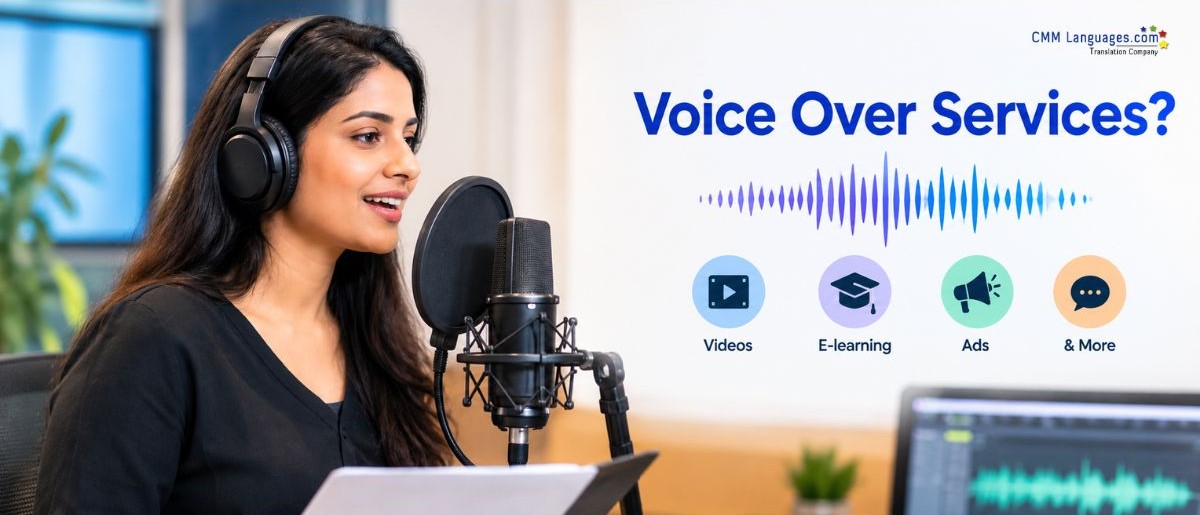
Record something in English and it stops working the moment your viewer is in Spain, Japan, or Brazil. That’s the gap what is voice over translation work closes: taking a script or a recorded voice and rebuilding it in another language without losing the tone, the pacing, or the point of the original. This guide walks through what voice over services actually cover, how a project runs from script to finished file, and what to check before you hire someone.
Key Takeaways
Anyone new to this space tends to start with the same question: what is voice over translation, and how is it different from just recording the same script in another language? The points below cover the basics.
- What is voice over translation, in short? Recording a script in a different language so the finished track still fits the same video, tone, and timing as the original.
- Voice over shows up in far more places than adverts. E-learning modules, phone systems, video games, and audiobooks all need it too.
- The global voiceover and dubbing market runs at roughly $4.62 billion in 2026, headed toward $8.78 billion by 2035. That’s a lot of content that now needs a voice in more than one language.
- AI voice generation handles plenty of jobs well. It still loses to a human on anything that needs real emotion or a brand’s trust.
- What you pay depends on usage rights and language as much as it depends on the voice actor’s day rate.
Comprehensive Summary
What Is Voice Over Services
Recording a voice track, in one or more languages, to run over video, audio, or interactive content instead of using the original on-camera speaker.
What Is Voice Over Translation
Adapting a script into another language first, then recording it, so both the timing and the meaning survive the move into a new market.
Voice Over Translation
The one thing that separates this from subtitling: the audience hears the new language instead of reading it.
Types of Voice Over
Commercials, e-learning, corporate video, animation, phone systems, audiobooks. Each one calls for its own pacing and delivery.
Benefits of Voice Over
Engagement and reach top the list, since a script spoken in someone’s own language holds attention in a way subtitles rarely manage on their own.
Voice Over Services
A proper service bundles casting, recording, editing, and delivery into one process, rather than leaving a client to chase freelancers separately for each piece.
What Is a Voice Over? (Definition)
A voice over is a recorded voice added to a video, an audio piece, or an interactive product, spoken by someone other than whoever’s on camera or was originally heard. Sometimes it narrates. Sometimes it translates, which is really the short answer to what is voice over translation. Sometimes it’s just giving something a voice that never had one.
Voice Over vs Dubbing vs Voice Acting vs Narration
People use these four words as if they’re interchangeable. They aren’t.
Voice over is the umbrella term, any added voice track counts. Dubbing means something narrower: swapping the original dialogue for a translated version that’s matched to the speaker’s lips. Voice acting is what brings a character to life, most commonly in animation or a game. Narration walks a listener through something, a documentary, an audiobook, without ever playing a character itself.
What Do Voice Over Services Include?
Booking a voice over rarely means just booking a voice and hitting record. A proper provider handles the whole chain, and for anyone still working out what is voice over translation actually involves, it starts right here, at the script stage.
- Reviewing the script, and translating or adapting it where the project needs that
- Casting a voice that fits the tone, accent, and language required
- Recording in a professional studio
- Editing, mixing, and syncing to picture if the project calls for it
- Delivering the file in whatever format and spec the client’s platform actually needs
How Voice Over Services Work
The order stays fairly consistent whether the job is a 30-second advert or a full e-learning course.
Step 1 – Script and Creative Brief
The client hands over the script, along with tone, pacing, and any brand voice guidelines that apply. If the project needs translation, this is where that work starts, converting the source script into the target language before anyone records a line.
Step 2 – Casting the Right Voice
A shortlist of talent gets matched against the brief, accent, tone, age range, language, and sample reads go back for approval before anyone commits to a booking.
Step 3 – Recording
The chosen voice records in a proper studio, or a home setup that actually meets broadcast standards, with direction to keep the pacing and tone on brief.
Step 4 – Editing and Mixing
Raw audio gets cleaned, timed against the video if there is one, and mixed in with music or effects when the project calls for that layer.
Step 5 – Final Delivery
Files come out in the format and specs the client needs, delivered straight or dropped directly into the video or platform.
Types of Voice Over Services
Different formats need different delivery styles.
Commercial Voice Over
TV, radio, online ads. Energetic, persuasive, built to sell.
E-Learning and Training Voice Over
Steady and clear. Comprehension matters far more than flair here.
Corporate and Explainer Video Voice Over
Professional but approachable, the tone most company videos and product explainers reach for.
Narration, Documentary, and Audiobook Voice Over
Long-form storytelling that has to hold someone’s attention for an hour or more, at a slower, more measured pace than commercial work in most cases.
Animation and Video Game Voice Over
Character work, sometimes dozens of lines across a whole range of emotional states for a single role.
Telephony and IVR Voice Over
Short, clean recordings for phone systems, hold messages, and automated menus.
Multilingual, Dubbing, and Localization Voice Over
This is where what is voice over translation shows its full value, adapting content for an entirely new market rather than just recording one language and calling it done.
Accessibility and Audio Description Voice Over
Spoken description of what’s happening on screen, for audiences who are blind or have low vision. Broadcast and streaming platforms are asking for this more than they used to.
Who Uses Voice Over Services?
More industries than people assume.
Marketing and Advertising
Brands need a consistent voice across TV, radio, and social campaigns, especially once that campaign crosses into more than one market.
Education and E-Learning
Course platforms lean on voice over to narrate modules clearly, a lot of the time in several languages at once.
Entertainment and Media
Film, TV, animation, and gaming studios use voice over and dubbing to get their stories in front of audiences who don’t speak the original language.
Corporate and Business Communication
Internal training, investor decks, product explainers, all of it runs on voice over more than people notice.
Healthcare and Technical Industries
Medical device instructions, compliance videos, technical training content. Accuracy matters more here than almost anywhere else on this list.
Customer Service and Telecom
Every hold message and IVR menu you’ve ever heard started as a voice over recording.
Benefits of Professional Voice Over Services
This goes well past just adding sound to a video.
Stronger Audience Engagement
A well-cast voice holds attention longer than text on screen or dead silence, particularly in video and e-learning content.
Brand Consistency and Trust
A voice that stays consistent across ads, videos, and phone systems builds recognition the same way a logo does.
Wider and Multilingual Reach
Not every audience reads subtitles comfortably. Certified translation opens content up to people who’d otherwise never engage with it at all.
Improved Accessibility
Clear narration and audio description make content usable for people who can’t rely on visuals alone.
Competitive Advantage
A polished voice track signals production quality, and that matters more than most brands expect when someone’s deciding whether to keep watching.
AI Voice Over vs Human Voice Over
AI-generated voice has come a long way. It still hasn’t taken over the whole field.
When AI Voice Over Works Best
Internal content, quick drafts, high-volume material with low emotional stakes, think basic product descriptions or internal notices.
When Human Voice Talent Is Better
Anything customer-facing, anything emotionally driven, anything tied closely to a brand. Timing and a real performance still beat a synthetic voice here.
How Much Do Voice Over Services Cost?
A quote depends on more than the voice actor’s rate card.
Factors That Affect Voice Over Pricing
- How long the script or recording runs
- Which language, and how many
- Usage rights, broadcast versus internal use only makes a real difference
- Studio time and how much post-production the project needs
- How experienced the voice talent is
Common Pricing Models
- Per word, or per finished minute
- A flat project rate
- Usage-based licensing for broadcast or paid advertising
- A retainer for clients with steady, high volume
How to Choose the Right Voice Over Service Provider
A few checks before signing off on anyone.
- Listen to a demo reel in the actual language and tone you need, not a generic showreel that says nothing about your project.
- Ask whether translation and recording happen under one roof or get handed off between separate vendors.
- Nail down turnaround time and the revision policy before you start.
- Check the studio setup. Not every home rig is broadcast-ready.
- Read the licensing terms closely if this is going out as paid advertising.
Voice Over File Formats and Delivery Specs
Most providers work within a small set of standard formats, though exact specs shift by platform.
- WAV for broadcast-quality, uncompressed audio
- MP3 for web, e-learning, or anywhere bandwidth is tight
- Sample rates land between 44.1kHz and 48kHz in most cases
- Stereo or mono, depending on where it’s going
- Separate voice and music stems if the client plans to remix later
Common Mistakes to Avoid When Hiring Voice Over Services
A handful of mistakes come up again and again:
- Picking a voice off the demo reel alone, without checking it actually fits your script and tone. Skipping the creative brief and expecting the talent to guess what you meant.
- Treating translation as something to bolt on at the end instead of building it into the process from day one.
- Skipping over usage rights and then getting hit with licensing costs later that nobody budgeted for.
- Rushing through the review stage and missing a pronunciation or pacing issue that should have been caught before final delivery.
The Future of Voice Over Services
AI will keep picking up more of the low-stakes, high-volume work, which frees human talent for the projects where performance and nuance actually matter. Multilingual voiceover demand isn’t slowing down either. Streaming platforms, e-learning localization providers, and global brands all need content that speaks to more than one market at once, and that need keeps growing. The providers who pair skilled human talent with an efficient translation and production workflow are the ones best placed to keep up.
If your project needs both accurate translation and professional recording under one roof, Voice Over Services from CMM Languages bring both pieces together. Get in touch to talk through your script and target languages.
FAQs on What is Voice over Services
What is the meaning of voice over services?
It covers the casting, recording, and production of a spoken voice track added to video, audio, or interactive content, separate from whoever was originally on camera.
What is the difference between voice over and dubbing?
Voice over is the broad term for any added voice track. Dubbing is narrower: it replaces the original dialogue with a translated version matched to lip movement.
How much do voice over services typically cost?
It depends on script length, language, usage rights, and how experienced the talent is, so pricing runs anywhere from a flat project fee to usage-based licensing for broadcast work.
Can AI replace human voice over artists?
For low-stakes, high-volume content, sure. Human talent still wins on emotional nuance, timing, and anything customer-facing or tied closely to a brand.
What industries use voice over services the most?
Marketing, e-learning, entertainment, corporate communication, healthcare, and telecom all lean on it heavily, each for its own reasons.